Episode Transcript
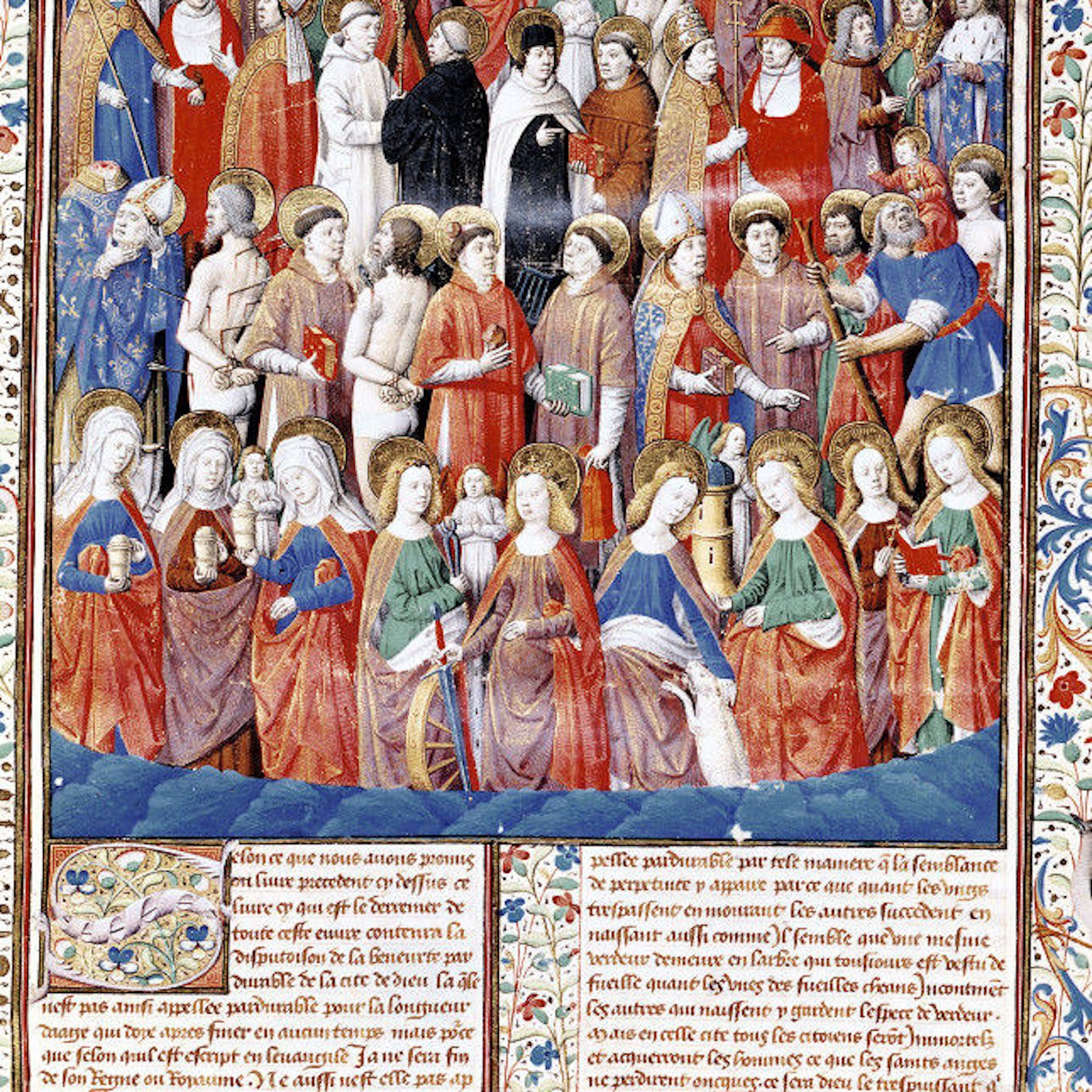
[00:00:17] Speaker A: In the city of God, St. Augustine paints the picture of two cities.
One, the city of God, which is eternal, defined by the love of God, and the other, the city of man, which is temporal and defined by the love of self. Augustine sees those two cities as, in a sense, irreconcilable.
From another perspective, the magisterial Reformation view, there's two kingdoms and two governments. There's the spiritual kingdom where God rules the world through the gospel, but also through the civil kingdom, through law and authority. In this view, it's actually a good thing when Christians get control of government and use that control for God's kingdom.
Which of these views is biblical or more biblical? Which of these views is right or wrong? We're going to discuss that and come to some definitive answers in today's podcast. Right, fellas?
[00:01:12] Speaker B: We'll do our best.
[00:01:13] Speaker A: Sounds good. Okay, Very good. Welcome to this episode of Word and Flesh podcast from Riverview Baptist Church. Thank you. Thanks for joining us. In the studio today we have Pastor Michael Bean.
[00:01:25] Speaker C: Hey, hey, what's up?
[00:01:26] Speaker A: And Pastor Ryan Anderson.
[00:01:28] Speaker B: Glad to be here.
[00:01:29] Speaker A: Glad you're here.
[00:01:30] Speaker B: Let's do it.
[00:01:31] Speaker A: Your young daughter is out toddling around
[00:01:35] Speaker B: parading the studio halls.
[00:01:37] Speaker A: I don't think that her squeals of joy will make it to the mic because I think I adjusted the settings well enough. But we're going to find out, I guess I wouldn't mind it. That would be some nice background.
So today, like we said, we're talking about a.
This is sort of coming to the end of our discussion on authority. Not the end end, but the end of at least this particular discussion on authority. And we were going to talk for a little bit today about governmental authority.
Spicy topic.
[00:02:06] Speaker C: It is.
[00:02:07] Speaker A: And what a Christian should think about the government, whether or not Christians should be involved in government, whether government can accomplish maybe either intentionally or accidentally or something else, the ends that pertain to the kingdom of God and various other questions, all of which Michael Bean has the definitive answer for.
[00:02:31] Speaker C: Yeah, thanks for that. I appreciate it.
[00:02:33] Speaker A: Okay, so tell us a little more about then. Let's start with that Augustinian view that we opened with. So St. Augustine, which everyone should read.
You should read St. Augustine. You will be enriched.
Writing in the. Is 4th century, right?
[00:02:49] Speaker C: Correct.
[00:02:49] Speaker A: And I actually have not read City of God, but I've read the Confessions, which are outstanding. Which is outstanding. Confessions plural, but is outstanding. It's a book.
And City of God is probably his most other. His other most well known work. So explain a little bit more like his view and Maybe we can start to distinguish it from the other and maybe there's other, other, other views. There probably are a lot, but we're at least going to today kind of go, well, here's a couple of different ways that Christians have looked at this.
[00:03:18] Speaker C: Yeah, I think that's helpful and that's exactly right. I mean, there's actually many ways in which Christians have viewed what is the best way or the right way to relate to government and wield government. But St. Augustine, his perspective, as Nathan's already described, essentially two cities, is what he paints and, and really looks at the moral driving force of the human heart in each city.
That's kind of his foundational premise, is there is a transformed heart inside of the city of God. There is not a transformed heart inside the city of man. And in fact, because of that, everything that's going to happen in that city is driven then by self love. And that includes the government, that includes the police, that includes everything that's attached to that. The self is going to be the driving force, the driving factor.
Whereas if you are a part of the city of God, suddenly you can operate outside of that realm in a new way. And so he actually sees the government as a common grace and a restraint against evil, but not a particularly good gift to man that was existent before the fall, that this was not a part of the natural order of things in the original created order. And so that is really his key distinction. He would say it's good to be engaged, it's good to want a Christian leader. In fact, he even goes so far as to say that we should pray that there would be Christian leaders in the government, but at the same time would also say on the other side, don't put your hope in the government because it's a fallen world, it'll never affect ultimate peace, any kind of utopia that you may desire. And so that's a short summary.
[00:05:04] Speaker B: I'm going to jump on that for a second. I think give a caveat and then address that.
[00:05:09] Speaker A: Caveat.
[00:05:10] Speaker B: Is that a good word?
[00:05:11] Speaker A: I said caveat.
[00:05:12] Speaker B: Caveat.
[00:05:12] Speaker A: I don't know.
[00:05:13] Speaker B: Whatever, however, tomato, tomato, whatever you like to say.
[00:05:16] Speaker C: That's right.
[00:05:16] Speaker B: Every single person thinks that their own personal way of relating with the government is the best.
[00:05:23] Speaker C: Of course.
[00:05:23] Speaker A: Yeah, mine. Mine, actually.
[00:05:26] Speaker B: Yeah, precisely.
I don't know about that. We talk about it in public. Maybe not. Maybe we'd be exposed. Anyway, the.
I just want to encourage people. I think one of the bad results of our time is that we have been convinced that politics is a black and white issue as it relates to the church. It's a wisdom issue.
[00:05:48] Speaker C: Correct.
[00:05:49] Speaker B: Which means it's not so clear.
[00:05:52] Speaker C: Right.
[00:05:52] Speaker B: Which is why we're having this conversation anyway, the City of Man, city of God conversation. I think the Augustine view is especially helpful and convicting for modern American times because what it is fundamentally saying is that the government is fundamentally limited in its ability to bring out the kind of peace that you want it to.
[00:06:17] Speaker C: Correct.
[00:06:18] Speaker B: I think in our times, both political parties have just done away with that limited scope of government entirely. Even the conservative side will say, well, we believe in limited government. That's not even barely true anymore. Because they've both come to the position that says, well, if government operates exactly how I vote, then there'll be peace in the world. That's a lie from the start.
[00:06:39] Speaker C: Yeah, I think you're onto something there. And I actually hope that we can unpack some more of that, of ways that we hope too much in the government moving forward, because I think that's real.
As far as the other side of this is, as Nathan mentioned earlier, the Magisterial Reformation, where you had men like Martin Luther and John Calvin coming out and kind of reacting to the Catholic Church, and they had seen the church and state closely tied together.
And so essentially what they're saying is, hey, yeah, you can use the state to actually accomplish a whole lot of good and should think of it as, in effect, a tool for Christians that we should wield to create change for the better.
And so that's where men like Martin Luther and John Calvin would kind of disagree with Augustine. Augustine would be very skeptical that any lasting, significant change is going to be made, at least on a spiritual level, through the government. Whereas the reformers would tend to say, no, actually, when Romans 13 talks about the governing authorities being instituted by God, that that's actually a good gift, not just a common grace to restrain evil. Those are two separate understandings of what the government is. And I think a lot of us, if we're honest, even today as evangelicals, we tend to lean towards that view of Luther and Calvin, the magisterial Reformation, which would say, yeah, let's wield government to get good things done for God on a real practical level. And I think that's where we need to just pause and question.
Okay, then, honestly, what does that look like? Honestly, how do we do that if we're going to do that in a way that doesn't place our hope in the government as much as it does in Jesus?
[00:08:31] Speaker A: Good.
Yeah, I see the tension between those Two, because there's pieces of each of those that I really actually very much agree with the Augustine piece. I go, yeah, our ultimate hope is in the kingdom of heaven.
But Jesus prays, your kingdom come, your will be done on earth as it is in heaven. Right. So then I'm like, well, I want the kingdom to be brought to bear on our lives, like, on earth. And again, not that I want to go down the road of, like, how does that happen? When does that happen?
Not in this episode, at least.
But that is what we look towards as Christians. We don't look towards everything to be gotten rid of. And thank goodness this crummy earth that God probably should never have made in the first place is gone. Because now we don't have to deal with. No, it's the other way. It's like God wants to bring his kingdom to bear in every heart.
It says, in fact, that every knee will bow and every tongue confess. Right.
Knee will bow as very kingly kind of government language. Right. We have these prophecies about the government shall be on his shoulders. Right. And all these different things about Christ's kingdom coming to bear on the earth. So I want to say, okay, Augustine, yes. It's a good reminder to go. Don't place your hope in what one particular administration is doing. I'm not naming names, but, you know, I've seen that happen at some point in my life. I'll just say that.
[00:10:01] Speaker C: Yeah.
[00:10:02] Speaker A: And at least one point, perhaps literally every single administration I've seen in my life in my 41 years now, it seems like that is always the temptation. And then on the other side, Luther, I think this is what you were saying, Michael, was the government, it is a tool. And I would tell any person in whatever their sphere of influence is in the community or in their work or anything, that they should leverage that influence and use it to, as far as they can, bring the kingdom of God to bear in that space. Right, Right. And even I would even go so far as to say in that space with people who aren't believers. Right. Like, in fact, if you're like, you know, you're the boss, you should structure. And we have Christians at Riverview who I see do this. You should structure your business in a way that perhaps not everybody who works for you is a believer, but they're going to work in a place within a culture with values, with things we do and things we do not do. You're enforcing that in a way that is pressing forward the kingdom into those lives.
[00:11:13] Speaker C: Right.
[00:11:14] Speaker A: Even the lives that have not yet submitted to the king. We hope they do. So I go, well, if I would prescribe that to a business owner, I want to prescribe that to a person. Person. Let's not go national government, because that's such a crazy situation. Let's just go local government. Right. I would want to prescribe that to a mayor, to a commissioner, to a governor.
[00:11:33] Speaker B: I don't want a mosque on the corner. And the local government has some sort of power to avoid that.
[00:11:38] Speaker A: Is it better to have a mosque on the corner or to not have a mosque on the corner?
[00:11:42] Speaker C: Correct.
[00:11:43] Speaker A: It's better to not have one. Right, Precisely.
[00:11:45] Speaker B: Yeah.
[00:11:46] Speaker A: And so insofar as a person can wield the tool of government, the sword. Right. Figuratively to do that. Well, I would want them to wield the sword to do that. So that's. I'm articulating that tension. Right. Where I feel Augustine in a real sense. And I love Augustine, but Augustine, whatever. It's a grass. It's a kind of grass Augustine.
But I also feel the magisterial Reformation view, Luther and those guys, where it's like, yeah, but there's real things that actually could be accomplished by a Christian in government.
Somebody's going to be in government.
[00:12:24] Speaker C: Yep.
[00:12:25] Speaker A: Right. And this. I'm. I'm saying things that I myself would have disagreed with five years ago, by the way. I will admit that I have. I have thought about this a lot. Yeah. And adjusted my views slightly on some of these things.
[00:12:37] Speaker B: Amen.
[00:12:38] Speaker C: So it's good to hear.
[00:12:39] Speaker A: So I've monologued there for a sec. So riff off of that or what do you think about some of that?
[00:12:44] Speaker B: I really think it might be helpful for people to hear where we stand. Yeah.
[00:12:48] Speaker C: We could all just kind of go around the room and say, this is where I'm currently at, and recognize there's grace at the table. You know, I think it is important. We've mentioned, I think in earlier episodes we're not going to agree on every single issue because Christianity, frankly, is not a cult. We don't have to think exactly the same all the time. And so, yeah, on wisdom issues, we can disagree. I personally would lean a little more towards the Augustinian perspective that there's a certain skepticism that I have towards government. And I think Jesus words in John 18:36, as he's talking to Pilate, it's really interesting. He says to Pilate, my kingdom is not of this world. If my kingdom were of this world, my servants would have been fighting that I might not be delivered over to the Jews, but my kingdom is not from the world. And so he actually bookends his statement to Pilate. My kingdom is just vastly different than anything that you're thinking about in terms of government. Pilate. That is, I think, something that should inform the way then that we look at the kingdom of God and the kingdom of man. And understanding these two things really are almost like separate planets in some ways. They intermix in some ways, because we do live in a fallen world, but. And there will be a day. And this is the thing that I would stress for every one of us when we get to heaven. I don't think any one person is going to remember much or think much about. I'm so glad that I was from the United States of America. You're just going to be a child of God. You're just going to be a part of the family of God and the kingdom of God and all of that other stuff. Your brother or sister from an African nation or a Chinese nation or whatever the case may be.
That will just be done. I mean, there will be no talk of that. And so I think that is something that should shape a little bit of the way then that we think here and now.
[00:14:43] Speaker A: You want to go. You want me to go next?
[00:14:44] Speaker B: You go ahead.
[00:14:45] Speaker A: Okay, man. I'll try to be concise on this because I. For a decade or so would have. I guess if we want to take these two views, the Augustinian and the magistery Reformation view, I would have been not only just in the Augustinian view, but like, we shouldn't even have a government, right? Or if we're gonna have to have one, it should be. So what was the old saying like, you know, a government so small it could fit on the head of a pin, you know, or something, whatever, right. That it should be.
Have almost no effect or influence in people's lives at all. I've changed on that some. I don't know that I would say that I've even landed yet. I'll just admit that. But I've recognized that there will always be government.
And increasingly, the more I've kind of had to face the idea of what am I going to think about government? The more I've had to realize that it really is. Romans 13. I struggled with Romans 13 during this decade.
[00:15:40] Speaker B: I remember.
[00:15:41] Speaker A: Yes, we talked about these things, Romans 13:1, because it frustrated me. The Bible was very frustrating for me. In Romans 13:1, let every person be subject to the governing authorities, for there is no authority except from God. And those that Exist, have been instituted by. By God. I'm gonna be like, well, that's probably just referring to, you know, only the things that I agree with.
[00:16:02] Speaker B: Right.
[00:16:04] Speaker A: Only the governments that I like or something like that. Right. And so I struggled with that. But the more I've thought about letting Scripture guide my. Not just. Not just abstract thinking. I mean, it's good to think well. But letting Scripture guide my thinking on this is. It is true that all authority comes from God. And there have been governments among men from always. There always have been.
[00:16:28] Speaker C: That's correct. All of history.
[00:16:28] Speaker A: And I mean, I don't. I mean, frankly, I mean, even with Adam and Eve, you might not call that a government, but you would call it authority. Right. Among people.
[00:16:37] Speaker B: He was a king.
[00:16:38] Speaker A: Yeah, right. Actually, great point. So, yes, it was a government because God literally, it was a kind of government. It was a kind of structuring order and authority in God's world. Right. And so, yeah, these are the things that, as I've thought about it more, I've kind of had to let go of some of my.
I would have called it libertarianism or anarcho capitalism or something like this.
I've had to let go of more of that because it just doesn't really comport with how the world is. And I still think that government can be wielded horribly.
[00:17:09] Speaker C: Absolutely.
[00:17:10] Speaker A: That's not even a hot take. It's just like, look at literally any decade or month in human history. Right. But I've recognized more that there may just. You may, as a Christian, have to go, government is real. What then should we do in relationship to it? How should we respond to that authority? I mean, we let God's word guide us. All of that to say, I think where I'm landing more is one in which I think Christians ought to see government as a tool that can bring good godly things into society, but. But not as the fundamental tool that brings the kingdom to earth. So I think it is a tool. I think it's a really powerful tool.
But it's like, I think that we go awry when we go. And yes, as soon as we get the right set of Christians and elected various positions, then Jesus returns and that's it. I think that takes it not even too far.
[00:18:10] Speaker B: It takes terrible.
[00:18:10] Speaker A: Yeah, it takes the right. It takes it the wrong direction. That said, I would like to have godly men in those roles.
[00:18:18] Speaker C: Oh, absolutely.
[00:18:19] Speaker A: Like as president and as lawmakers and as judges and as mayors and governors, we would be way better off to have believing men in those Roles than not.
[00:18:32] Speaker C: Absolutely.
[00:18:32] Speaker A: So that's that tension. Right. As I go. Well, then I'm not going to necessarily say, well, okay, let's just in this podcast earlier, we're going to go run, you know, like picket some event.
But there is a level of recognizing, okay, well, politics and the government has a role to play. And I can either stick my head in the sand and pretend like it doesn't, or I can go, okay, and if we're then going to view it as a usable tool, we ought to be strategic then in how we view it as a tool too. Like, because if you're not strategic with tools, then you're just bad at them. Right. So again, I'm not even like landed on the plane that I'm on yet with this, but that's kind of where I've been thinking more. And I, I want to avoid going. Therefore, you should join the new political action committee that I've just formed. Congratulations. But I, I do want to acknowledge the things that I think are true there, which are that government is a tool to be. That is going to be wielded by somebody. Right. I would way rather it be wielded by a person who loves Jesus and for whom Jesus is king.
[00:19:34] Speaker C: Yeah. Well, and I'll just add this real quick on the Augustinian view and my personal view, you know, the prophet Jeremiah in Jeremiah 29 actually instructs the people as they're in exile to do good to the city in which they live.
And so even recognizing I'm in a pagan land that is diametrically opposed to the things of Yahweh, to the things of God, and yet the command is do well there, like, serve these people, be a blessing to the city. And so we can do that and should do that. And I think in part a way to do that is you do vote for Christian leaders. You are engaged to some degree politically. You just don't put your hope there.
[00:20:13] Speaker A: Yeah, yeah, yeah. Good. Okay, Ryan.
[00:20:15] Speaker B: But the issue with that is no one thinks they're putting their hope there.
[00:20:19] Speaker C: Right.
[00:20:19] Speaker B: But fundamentally they are.
[00:20:21] Speaker C: Yeah, it's very deceptive.
[00:20:22] Speaker B: So deceptive.
[00:20:23] Speaker A: Okay, so what do you mean? Like, give me an example of intentionally putting your hope there versus oh, my
[00:20:28] Speaker B: hope's not in the government. But if my pastor doesn't address this issue exactly like I think it should
[00:20:32] Speaker A: be in the pulpit, I'm out.
[00:20:34] Speaker B: I'm out. Then your hope's in politics, not in the proclaimed word of God.
[00:20:38] Speaker C: Well said.
[00:20:39] Speaker B: I'll admit this is an insanely difficult issue for me. Because I have, you know, grown up in the, you know, social media age. I've had social media for more than half of my life now, which I hate. But I, I've watched these conversations ebb and flow and you know, six or eight years ago I was absolutely obsessed with politics. I still enjoy politics. Some sick part of my being enjoys knowing about politics. But the, the issue with the media age now is it is so easy to be propagandized into something you believe to be absolutely true. And I, I, I regret that in 10 years we'll find out that none of it was true. And so from my experiential perspective, I would just be a lot more comfortable in the Augustinian place. But the government's lying to you anyway. Forget about it, move on. And if you are a Christian and you get into government, frankly, I believe that lie before and then they get into government and they vote the same exact crap that they said they weren't going to vote because it's such a corrupted place. And so it's really easy for me to just go into the, well, forget about it. But I do.
As I think about the relationship between the church and the state and teachings of Romans 13, Jeremiah 29, seek the welfare of the city, I think that Calvin and Luther were onto something. I think the difference, I think if you were to read books of church and governmental history at the time, this is me spitballing, because I haven't, well, not in the truest sense, but I think you would find out that the baseline level of political engagement in idolatry was far lower than it is today. Like people didn't recognize government as, as savior ish as they do now.
[00:22:22] Speaker A: Well, maybe also it wasn't exactly democracy back then. Correct.
Well, that's a whole other, you know, we could make this episode two hours long. That would be cool because, but in a short sense there is, I think actually what you're getting at, gets at, I think, weaknesses built into different forms of government.
[00:22:42] Speaker C: Correct.
[00:22:42] Speaker A: Because when you, you're set up with literally every person that can fog a mirror over the age of 18 and doesn't have a, whatever violent felon or something on their record can go vote, you open yourself up to a situation in which everybody thinks that their opinion is really, really rock solid on what's happening. I'm like, man, most of those people, I would never want shaping my life. They can't shape their own lives.
Right. No offense to those wonderful folks. But you know, so yeah, like with Calvin and some of these guys, they're in a very different governmental structure too. Right. And there was a sense then that excellent people would rule.
[00:23:26] Speaker C: Yes.
[00:23:27] Speaker A: And that's different.
[00:23:28] Speaker B: Very different now.
And. And so I'll just kind of wrap my thoughts up. I am in the. The reformers camp. I generally just am in the reformers camp. I think it's a good and potentially beautiful thing so far as it's wielded well when Christians aim to serve in government and maintain their convictions along the way. I think that's a good and beautiful thing. Good.
[00:23:51] Speaker C: That's good.
[00:23:51] Speaker A: It's good way to wrap that up. Yeah, yeah, yeah. I think there's probably a little bit more to be said about how we respond to government then, because we've done kind of the philosophy of. So how do you respond to, you know, what, how should we, real world, real life be engaged with, you know, submit to. Not submit to.
Pay taxes to. Not pay taxes to, like what. I mean, I'm not saying do illegal things here, you know. You know what I'm saying? Like, how do we think well and then actually respond well to government?
[00:24:25] Speaker C: I think the. This is in my mind where it does get a little clearer and easier in terms of scripture.
Both Peter and Paul make very clear commands to those that they're writing to and say, be subject to the governing authorities, as Paul says in Romans 13. Or Peter says, be subject to the emperor. And at that point, the emperor is literally working to kill Christians.
[00:24:50] Speaker B: Cutting their heads off.
[00:24:51] Speaker C: Yeah. And Paul is literally going to have his head cut off later. And so the reality is these men are fully aware. These are pagan leaders. They despise Christianity, and yet they're saying, be subject to these men. That is something that as Americans, we just can't even relate to that, that level of subjection. I mean, we already have people saying on either side of the aisle, this is not my president. When someone gets elected and Paul would say, that is your president and you better honor him as such. Honor the emperor is what, again, Peter says. And so there's.
[00:25:28] Speaker B: This is when people turn the episode off.
[00:25:30] Speaker A: Okay, So I don't want to totally derail you, but why, why honor him? He doesn't deserve it. Right. He's a scumbag. Right. You know, the internal reaction, why honor him?
[00:25:41] Speaker B: I think that regardless of the person in the office, it is a misunderstanding of the sovereignty and providence of God to throw a public hissy fit when someone is in office that you don't like. In other words, if you believe the authority of the Bible, you believe that God put them there. And if you believe the. The triage of theological issues. In other words, this conversation is an important conversation, but it's not first tier. In other words, the gospel breaking in government can or cannot do that. Either way, if you throw a fit about the. I guess I should probably qualify what I mean by throw a fit. But if the majority of your conversations, in times where the person in office is not your preferred person, if the majority of your conversations are complaining about that political office as opposed to proclaiming the gospel and the truth of scripture, you've misunderstood the sovereignty of God and you've misunderstood the relationship between scriptures and the breaking in of the spiritual kingdom and the relationship between the government and the law kingdom.
[00:26:39] Speaker C: Okay, yeah. And I would just add to Ryan's point. If you go back and again, understanding the idea of sovereign appointing, working, moving of the Lord from the Old Testament, King David, he has an opportunity to remove Saul. Saul has been anointed king. And David had been anointed king. He was the future king of Israel. Saul is trying to murder him. Saul is an unjust, unfaithful king. And David chooses literally. His words are, I will not raise my hand against the Lord's anointed. I'm not going to kill this man or remove this man because God has anointed him. It's not my place to do this. And I think the application of that very easily is, as Christians, there is no, I mean, you could also add, let no unwholesome talk come out of your mouth. There's no place for coarse jesting or joking about these people in office.
We cannot hate them. We cannot speak ill of them. It is not our place. For whatever reason, if God is actually in charge, he has allowed them the position they have.
[00:27:45] Speaker B: Yeah, I think that doesn't mean you shouldn't speak openly about obvious policy that relates specifically to Scripture.
[00:27:52] Speaker C: Oh, we can criticize, of course.
[00:27:54] Speaker A: Carefully oppose. Oppose even abortion and, you know, transgenderism.
Please oppose that. Right.
[00:28:01] Speaker B: I also think that when someone is, you know, voraciously and obviously throwing a fit, that it's a basic misunderstanding of the best times in Christian history. If you read the last 2,000 years of the history of the church, what you will find out is that when governmental times were the hardest, the New Testament Church exploded.
[00:28:25] Speaker A: Why?
[00:28:25] Speaker B: Because Christians kept their heads on straight. Well, actually, except for in Rome, but that's a bad joke. Maybe.
[00:28:31] Speaker A: Oh, wow. Decapitation.
[00:28:32] Speaker B: Maybe we should take that out.
[00:28:33] Speaker A: 20 minutes in, we're making decapitation jokes. But you get the point, right?
[00:28:37] Speaker B: Like when we throw a vid about the party not being what we want. Like read Christian history. Read the church exploding. Read the fastest growing church in the world right now. It's in Iraq and Iran and China. Like, maybe it's a gift when the government is not exercising Christian virtue and value. Not that we want that, but maybe it's a gift that people see the truth more clearly than they did before.
[00:28:57] Speaker A: Yeah, it's. I think it's, and this is where I think it's important to go with this is to go if a, if a, if a non Christian or, I don't know, a person who professes Christianity, but it's sort of dubious or whatever, whatever gets elected into. I mean, all we ever think about is president. But you know, there's a lot of important roles nominated or appointed, supreme or Supreme Court justice, whatever. Did God just like forget to go vote that day?
Is that what happened? God forgot to go vote? Now again, it's not saying that. It's like, no, God is the kind of God that sort of loves for evil things to happen, whatever. But is that a potential, that evil person being put in power still under his authority? Yup.
[00:29:41] Speaker C: Absolutely.
[00:29:42] Speaker A: Right. And again, I think this is why the Saul David one is actually a great example. It doesn't require you to be like, man, Saul is just the best. He's just the best. King debased.
He's debased. Right.
[00:29:53] Speaker B: Scripture's not telling us to lie. Yeah, that's true.
[00:29:56] Speaker A: Like say the truth. Right. And push the truth forward.
And insofar as whatever things depend upon you.
[00:30:05] Speaker C: Right.
[00:30:06] Speaker A: Push for good godly Christian people to be in roles of authority. But in some national political election, your vote don't matter anyways. I'm just kidding, but I mean, kind of kidding. But you know, you did whatever you could, went and pulled the lever for so and so. Well, if so and so didn't get elected and some other guy did, and this guy is hostile to the faith, God didn't sort of again, forget to show up that day and cast his Trump vote or something.
[00:30:33] Speaker C: Right.
[00:30:33] Speaker A: That was not, that was. I didn't mean to say it that way, but cast his vote that the trump card vote.
[00:30:38] Speaker C: Right.
[00:30:38] Speaker A: Still doesn't work. You know what I'm saying?
[00:30:39] Speaker C: Yeah, we get what you're saying.
[00:30:40] Speaker A: The vote that, that wins.
[00:30:42] Speaker C: Right, Right. Well, here's the perspective that I would encourage us to take in regards to this. Ryan said, if the government is opposed, could that be a gift? And of course the answer is yes. And so here's the way that I think we can as Christians look at these elections again, realizing most of Christian history, people didn't even have that ability. And so we're already blessed just to be able to participate in that way. But here's my thought. If a Christian is elected, that is a gift.
[00:31:13] Speaker B: Amen.
[00:31:13] Speaker C: It's a wonderful gift. If a Christian is not elected, that too is a wonderful gift, because it is in the darkness that the light shines the brightest. There's no doubt that as our culture has grown darker politically and socially, the church has seen a revival. There is a smattering of new growth, young people recognizing what's happening is not working. And so I'm maybe not going to put my hope in a political party right away. Maybe I'll look to the church. That's a gift, guys. And so it's a gift in either direction. All is grace. God is in control, and we can have peace and rest regardless of the outcome of our elections.
[00:31:53] Speaker B: Yeah, I think a great barometer of this. Whenever the next election day comes around, call it November 5th. On November 4th, when I wake up and as a Christian, I think to be civically engaged, go to the voting house and vote, I'm going to wake up that day. I'm going to remember two things. One, I live in a fallen world. Two, I serve a sovereign God. Yep. On election day, when my candidate wins or does not win, I'm going to wake up and remember the two same things. I live in a fallen world and I serve a sovereign God. And if you can't get yourself to say that when your candidate loses, something's wrong.
[00:32:27] Speaker A: Good. Good line.
[00:32:28] Speaker C: Yeah. Well, and I think that's a good segue to our next question for us to ponder. We've already gotten into this a little bit.
[00:32:36] Speaker A: Okay. What are some common mistakes Christians make when relating to the government? That's the second question. Right.
[00:32:42] Speaker C: That is it.
And obviously where we place our hope. I think that's the primary mistake, but I think there's many. Here's one.
It's already been alluded to.
I think we horribly try to wield social media to promote a political perspective that we hold instead of either just being quiet, which there is a time and a place to do that, or to speak of Jesus. It kills me to think about how often when an election season rolls around, how many political posts I'll see on social media, Facebook, whatever, and how little I know those same people are actively involved in churches. But there's no talk of Jesus. That's just an Interesting parallel.
[00:33:24] Speaker B: Me, I think there's a great and unfortunate metaphor when I'm willing to put a political sign in my front yard, but I'm afraid of someone rejecting the gospel, and so I don't have the conversation. Which banner are you waving? I told you, I. I was obsessed with politics when I grew up. Before I could even vote, I made my dad drive me to the local Republican office. We got 10 signs, every possible local official that you could imagine, and presidential and Senate level, everyone you could imagine in Cincinnati at the time and have put them, every single one of them, in my front yard. Is it wrong to do that? Well, I don't know. Is it best? Probably not, especially in the divided nature of our times, because the gospel is first of first order every time. And just we have to be able to admit that if I put, you know, a Biden or a Trump sign in my front yard, 50% of people have automatically said, I'm not talking to you. I don't think that's worth it. That doesn't mean I won't have conversations like this.
When has someone ever been convinced by a sign in my front yard? And when has someone ever been convinced by a social media post that I made? Never. When have they convinced by a loving, serious, reflective, intellectual, maybe even sometimes heated conversation? Much more likely. And so I think the danger is to really piggyback off Michael's is overestimating the power of politics than overestimating my own voice in the power of politics and making that above the gospel. And then I ruin a chance to evangelize the lost. I don't think that's worth it.
[00:34:53] Speaker A: Yeah.
[00:34:53] Speaker C: I'll give you another mistake that I think Christians can make, and this is one that I made early on because I had read the City of God in college and as a part of a political philosophy class. And the mistake I made was I read into that, that it gave me permission to be disengaged and cynical to say, I don't want any part of this because God's kingdom is all that matters. And again, actually, I don't think that is what right.
[00:35:22] Speaker B: I think that's misunderstanding between how the kingdom of God and the government works.
[00:35:24] Speaker C: Exactly. That's exactly. And that God has given us the government. And Jeremiah, again, 29, do good to the city in which you live. There is a place in which we are placed. And God has given us the ability to be of benefit to the people around us, to be a blessing and not a curse. And so to disengage is essentially to commit the sin of passivity. It's just to passively say, what will be, will be. And I don't. I'm of no consequence. And I think that's also unfaithful. And so that is. That's where I was, honestly, as a young man. There were a couple of elections in college I chose not to participate in. I don't think that was good stewardship. I don't think that was wise. I think that was a place where I needed to, frankly, learn to grow up and take some responsibility and be faithful, where God's placed me.
[00:36:14] Speaker A: Here's my answer. I think that.
And this is working under. The Christians should leverage whatever influence they have to shape their culture and their place.
[00:36:24] Speaker B: Agreed.
[00:36:25] Speaker A: Because I would far rather live under a culture that. That loves and honors God by and large, than one that doesn't. Y life is way better in the first one.
[00:36:33] Speaker B: Yep.
[00:36:34] Speaker A: Yeah. You know, like, ask the, you know, people in the Gulag.
[00:36:38] Speaker C: Correct.
[00:36:38] Speaker A: Which one's better? Right.
[00:36:40] Speaker B: This Easter Sunday will not be National Transgender Visibility Remembrance Day either.
[00:36:44] Speaker A: Oh, like it was a few years ago, right? Yes, yes, there's a difference. We're recording this as Easter Sunday is coming up, even though you're listening to it after. But, yes, hopefully, Lord willing, no Easter Sunday ever again will be that nonsense. That evil, evil, demonic nonsense. So that said, here's, I think, a mistake that Christians make when it comes to thinking about and involving themselves in whatever sphere, which I don't know if I even think that all Christians should be involved in politics, other than, you know, go vote, you know, but, like, you know, it's not necessarily your calling to be involved in politics.
My skepticism of democracy should be coming out pretty strongly here in this episode, if it hasn't. Let it just be on the record that I'm not sure that we're on
[00:37:30] Speaker B: the edit that part.
[00:37:32] Speaker A: No.
So, okay. So, anyways, I think a mistake that Christians make is that they imagine that their best chance at leveraging whatever their influence is to push the Kingdom of God forward is on some national election and national politics. You most powerfully can affect your little community.
That is the space in which you have. I mean, that's just math, Right? You are a very, very, very, very, very tiny fraction of the national population, but you're a much larger fraction of your local community. Especially when you think about almost certainly your voice and your business and the stuff that you do and the relationships that you have and the people that, you know, extend where. Not till D.C. right.
[00:38:20] Speaker B: Ugh. Very rarely.
[00:38:22] Speaker C: Yeah.
[00:38:22] Speaker A: Right. And if they do use them, use that. Right? Yeah, exactly. But by and large they extend like right here, like in a one to three county area maybe. Right. And so I think Christians a lot of times, because national politics is so exciting and dramatic and I don't know, I don't there's reasons that people get caught up in it, but I think that Christians expend too much of their like emotional and thought energy and all that stuff on those. Not that they don't matter, but you actually, from a, from a return on investment standpoint, you actually make much more headway when you go, no, we're going to bring the kingdom to bear in our community. I'm going to push the kingdom forward in my space. And again, I think that applies to politics locally and I think it extends into work, economics, just even, I mean, to an extent, even like the business, social club, whatever things that you go to that are related to your life, even the sports, things your kids are in, those are the places where you bring the kingdom into those spaces, right?
[00:39:27] Speaker C: Absolutely.
[00:39:28] Speaker A: You're not really going to do much on the national scale. Very few people can affect much at all. But most people can affect a decent amount in their community.
So that's, I think a mistake that Christians make that's great is that they wrongly estimate where they ought to be investing that. Because, man, life is full of stuff, right? Like we got church and work and kids and marriage and you know, like sleep and a little bit and stuff. Ryan doesn't have much sleep these days. But with all the things you got juggling, but with the little bit of margin or whatever, the little bit of space you have, I think we ought to be focusing more on transforming our town than transforming our nation or continent or something.
[00:40:12] Speaker C: Well, to that end, let me just jump in and say this.
I've got a question for you guys. How do you make America a Christian nation again? If it ever was, how do you do that?
[00:40:22] Speaker B: If it ever was, you could have a whole conversation about that.
[00:40:24] Speaker A: It was more than it is now.
[00:40:26] Speaker C: Correct?
[00:40:26] Speaker B: Of course, absolutely theistic. But we'll take that over.
[00:40:30] Speaker A: Well, not mostly though. See. Okay. I've even changed on this one.
[00:40:36] Speaker B: I think if you read the Bible, you have to be able to say it's through the organic breaking in of the kingdom that happens primarily in the local church.
[00:40:44] Speaker C: Thank you. Okay. That's exactly where I was wanting us to go.
The way we will make America Christian. Say it loud is the gospel.
[00:40:52] Speaker B: Amen.
[00:40:53] Speaker C: It's you as a mom or dad telling your Children, Boom. Jesus is the purpose of your life. He is the author. He is the creator. He is the giver of every good and perfect gift. Know him, love him, live for him.
You will never make America a Christian nation through the ballot box, friends. And if you don't hear anything else today, that's just what I hope you hear, is that man, I think here's the number one mistake I see Christians have made is, frankly, we've thought we could shortcut the system that God designed. We thought, hey, instead of actually living the Christian life and actually sharing the gospel, those things are hard and they take time. They're slow. So I'll just go to the ballot box and fix it on November 5th.
[00:41:41] Speaker A: Yeah, that's exactly right.
[00:41:43] Speaker C: And, friends, that is the mistake that we're all tempted to make. But I think, again, if we can shift our perspective to say, okay, God has given me some good authority. I am a mom or dad. I am a business leader. I am a person that serves in my church. Whatever your position is to wield that for the kingdom, that's how you make America a Christian nation once again.
[00:42:09] Speaker A: Fire.
[00:42:10] Speaker B: Yeah, I'm almost. I'm having to hold back tears because I think one of the most sinister aims of our time, and I think you have to admit that it's purposeful, is that all these other streams have convinced us that if we participate in them, then we're living in the purposeful life. Yeah. When the most purposeful thing you could do is to cultivate your own plot of dirt.
[00:42:31] Speaker A: Boom.
[00:42:32] Speaker B: Is to use your kingly dominion and your leadership in your home and in your church.
It's this. I was just thinking as you were talking, like, this is the same. It's amazing how these problems just start off right. The disciples were unsatisfied that Jesus was an organic, embodied, simple servant. What did they want? They thought he was going to interrupt King Herod's reign and be the king and overtake all the land.
[00:42:57] Speaker A: Yeah. Short circuit.
[00:42:58] Speaker B: They weren't satisfied that a little boy from Nazareth, born in a stable for pigs, raised in no man's land, took the reigns of the earth with simple gospel proclamation. We got to be okay with that. In fact, that's the most beautiful. Right? Like, well, I'll go vote in my election, but I don't need to serve in the kid zone on Sunday.
[00:43:18] Speaker C: Right.
[00:43:18] Speaker A: You say that as your little one squeals out there in the hallway. Man. That's a good soundtrack.
[00:43:23] Speaker B: We better wrap this up. We can talk about this for a while.
[00:43:25] Speaker A: No, because, yes, I think that's a great place to end. The idea that the realm that God has given to you is the place that you're called to bring the kingdom to bear in your home, with your children, with your spouse, in your church. That's where you're called to the kingdom. And again, it doesn't mean don't vote or whatever, but it means that that's the place where you actually make meaningful impact. And then the reason I think that we. I think that we were a Christian nation, like, was because the people in the nation were Christians fundamentally. Because. Because Christianity was flourishing among people.
And then. And then actually government, the Christian nature of people in government was an outflow from that. So. Great point. Yeah, it's down, it's bottom up. Right. I mean, again, vote for the best one, whatever. Right. But again, the way the transformation happens, the way you leverage your influence is from the bottom up. Did you want to have one. One last add to that and then we'll.
[00:44:22] Speaker B: I think it'd be a good way to close. I've never been to a funeral where your grandkids talked about how you voted.
I've been to lots of funerals where your grandkids and your kids talked about how you imparted faith to them.
[00:44:33] Speaker A: Excellent. We're going to end on that. Press in, folks. Press in.
Bring the gospel to bear in your homes, with your children, in your marriage, in the church, in the place that you work, in the business that you own, in the little sphere that God has given you, the little piece of dirt that God has given you. Cultivate that for the kingdom and we'll see what God does with that further up and further in. Friends, we'll see you soon.
Sam.
Jesus.
[00:46:21] Speaker B: Sam.
[00:46:46] Speaker A: Ra.