Episode Transcript
[00:00:17] Speaker A: So I have authority, but how do I use that authority? How should I use that authority? How should I, as a Christian, use that authority while recognizing the ultimate authority, honoring the ultimate authority, and leveraging his authority into all the spaces I'm in?
Those are some of the questions we're going to get into today on the Word and Flesh podcast. Welcome to this episode of Word and Flesh, a podcast from Riverview Baptist Church. For Riverview Baptist Church. Thanks so much for joining us. I'm Nathan Bechtold, an elder at Riverview, joined again today by Michael Bean.
[00:00:49] Speaker B: Glad to be here.
[00:00:50] Speaker A: Glad you're here. And Brian Anderson, the one, the only.
[00:00:54] Speaker C: I don't know about that, but let's do it.
[00:00:56] Speaker A: Let's do it. So we're talking about authority a little bit, and what I said I wanted to do just for a moment. This may literally be only for me. I'll be the only person that cares about this. I like to think not. But I want to get just for a second into the root of the word authority. We talked about the Greek word existia, exousia. Yes.
But that's actually not where we get our English word. You know, the English word actually comes from a Latin word.
I was looking this up a little bit, and it actually is really, really fascinating and kind of, I think, helps you. I always want to understand what the word is, like, what it's referring to, especially because when we say the word authority, it's like, well, I see other words in there.
Author. Right, Right. And it's like, well, wait, what does authority have to do with an author? Right. Well, good question. That's the right question. Right. So the word authority comes from the Latin auctoritas, I think.
I didn't take Latin. I'm just reading this. But aktor, which means originator, founder, or one who causes something to grow.
So aktor comes from the verb algeria, which means to increase, to grow, or to make something grow.
And I thought, man, that feels loaded full of ideas about what authority is and what it's meant to do.
So I was thinking about again, so then that relation, relationship to author, originator. And we always think about the word author. Almost always we just use that word in reference to a person who writes a thing. Right. You don't really use it for much else. Some things, you know, generally just like a written thing. And I was kind of thinking about, well, I wonder why that is.
And part of it probably is that an author, a person who writes a thing, kind of brings, really, truly brings into being something that was not Before, Right. Like he wrote a book or a story or a thing. And it's not that he didn't reference, you know, I mean, every story is just stolen from other stories. Right. We know this, but he truly brought into being a thing that was not before. He's the author of that story.
And that the longer you think about that, the more you start to see the connections between that and the idea of authority. I was thinking about authority in the workplace or I have authority in my business. Right. And people that are a manager or the owner of their business have authority. Well, if an author of a book is the person who tells the story, in other words, sets the direction of the story, they decide where the story's going and where it's not going. Right. Then the person who has authority in the space where they have authority, they're setting the direction. Right. Like, ultimately they are originating from a certain standpoint where that whole thing is going. Right. And if it goes well, then they're worthy of honor. And if it goes poorly, then it falls back on them. Right. You think about this in all the places, like a coach having authority. Right? The same thing. It's good that he has authority and he decides what play we're running, right?
[00:04:07] Speaker B: Yeah.
[00:04:08] Speaker A: And if it's the wrong play, that is on him, and if it's the right play, that was his call. Right.
And then I think that if you back that up, I'm just doing this whole episode solo. I'm not. I'm about to turn it over to you guys. You back that up, you go, well, yeah, but, you know, a person who has authority in a certain space, they're not like the author. God's the author. Right. Like, they didn't make those people or the stuff there. Right. It's like, yes, exactly. And that takes us to the idea that the ultimate, the first authority actually comes from God. We talked about the Garden of Eden in the last episode and how Adam is set up as a king over the earth. That authority is given to him from God.
In fact, in the Great Commission, Jesus says, all authority in heaven on earth has been given to me. Right?
[00:04:54] Speaker B: Absolutely.
[00:04:55] Speaker A: So God the Father, God the Father has the authority that he gives. And so as we talk about authority in this episode, I wanted to sort of lay that groundwork first. That a person who has authority in the various realms, that they have authority, they are a kind of an originator, Right. They're the story setter. They're the one who decides where we go and where we don't go. But Ultimately, their authority is not self originating. Right. It actually originates from God.
[00:05:22] Speaker B: That's right, yeah. And I think that's, you know, where we want to go as we think about our next few minutes together is looking at, you know, we all have some sort of authority granted to us.
And so how do we wield that? Well, like how do we manage the authority God's given us? And I think that's one of the things that whether you're a pastor, whether you're a parent, whether you're a business owner, whatever it may be, we all have a place to think about how do I use my authority appropriately and how do I understand it rightly.
[00:06:00] Speaker A: Good. Okay. So what we want to do, we really like bullet pointed some things. A biblical framework for how to use authority. Well, so I have authority in these various spaces. Maybe we'll touch on some examples of spaces that people have authority and then we'll say, how can I use that well, as a Christian to push forward the kingdom of God in that space over which I have authority?
Actually, we just kind of hit number one, which is authority is received, not earned or achieved.
So say something about that for a second.
[00:06:34] Speaker B: Yeah, well, I think that's foundational because ultimately that is the opposite. It's antithetical to what our culture teaches.
[00:06:42] Speaker A: Yeah, you just go grab authority, then you have authority.
[00:06:45] Speaker B: That's right. Go take the bull by the horns. Right.
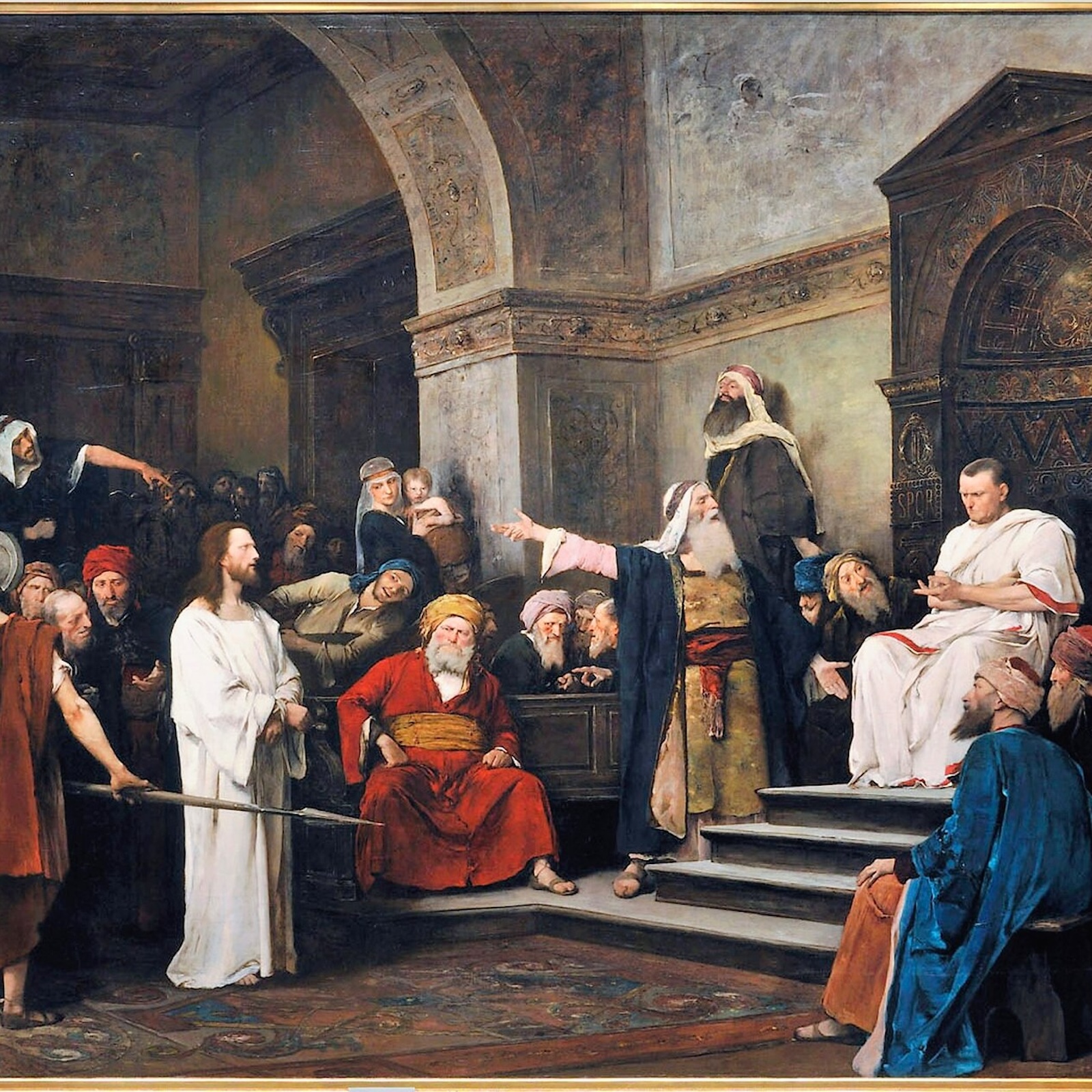
And so again, I think Jesus words in John 19, Again, I believe it's to Pilate when he's talking and he says, you would have no authority over me unless it had been given to you.
And so again, that authority that Pilate had to crucify the Son of God, ironically was granted by God and was the sovereign plan of God to save the world. And so he used, frankly, Pilate's misuse of his authority. Pilate was doing this because he was a coward.
And so he was afraid of the mobs. And so he allowed Jesus to be killed and misused his authority. But God's authority is so great, he essentially overrode that and worked through that to bring about salvation and all that. Just simply to say, whatever it is, whether you're a mom, whether you're just a manager at some business, whether you're a deacon or a pastor or a life group leader or whatever the case, your authority is not your own, it is on loan from God. And that is, if you hear nothing else today, I think that's the first thing to hear.
[00:08:01] Speaker A: That's good. I want to hear from Ryan about This. But I want to adjust his microphone first.
[00:08:06] Speaker C: Thank you. Thank you.
[00:08:07] Speaker A: Okay, okay. Because I want to hear every syllable. So. Okay. Thoughts? If you want to hit that one or if you want to move to the next one.
[00:08:14] Speaker C: I don't want to hit the next one yet. What I want to say is your ability to use your authority well is fundamentally dependent on the health and vitality of your soul before the Lord. If you're not cultivating a personal, vibrant, joyful, scripture centered, accountable relationship with the Lord, well, no one should follow you.
But also your wife's going to feel pushed under. Because if your authority is self serving, and it's not to say that because you're vital and alive in the Lord, you still won't mess up. That's not the point. But a lot of times we try to exercise authority without.
Well, really it is the third point on here.
Without sitting under the authority of the Father first and submitting myself to Him.
You don't just lead and rule well without being lead and ruled well first.
And we got to start there.
[00:09:12] Speaker A: Good, good. Okay, so next one is use your authority. Again, this is kind of. We're already kind of getting into some of these. Use your authority to serve others and not to control or rule over them.
I think about there's a command to husbands actually that relates to this. Right. Help me recall it.
[00:09:33] Speaker B: Husbands, live with your wives in an understanding way.
Right?
Yeah. So we're called to lead our homes and we're called to literally be the head spiritually of the household. And yet we live with our wives in an understanding way because we will give an account for the way that we have treated our wives. And so there is this interesting dynamic, I think again of Jesus most famously to his own disciples, saying, you know, that the Gentiles Lord their authority over one another.
He says, not so with you. You know, essentially that whoever wants to be great among you must be your servant or your slave. And so there is a way to wield authority to make others serve you. And there is a way to wield authority where you actually use that as a gift and serve others.
And that dynamic is something only Jesus Christ got perfect. Right?
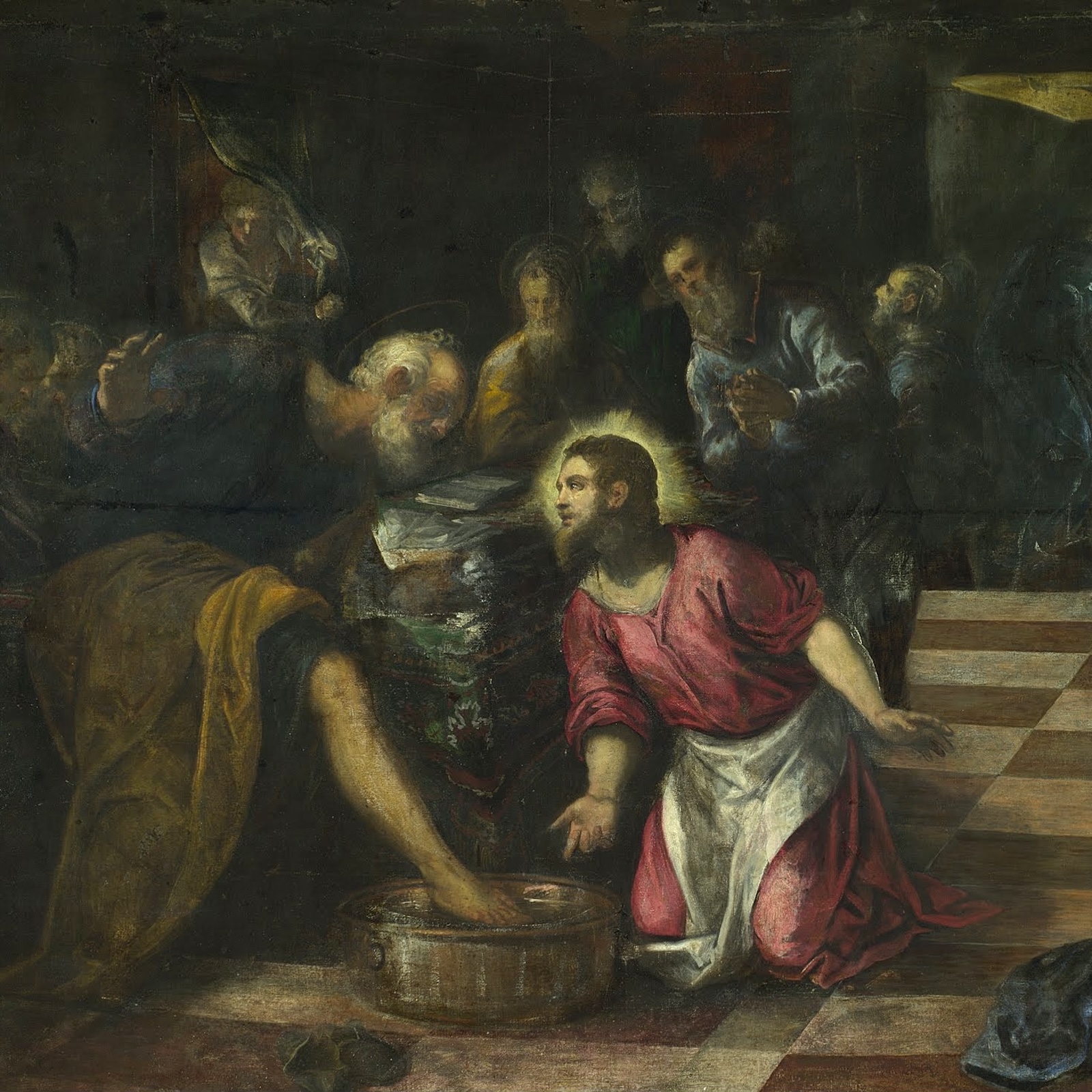
[00:10:38] Speaker C: Yeah. I think Ephesians 5 obviously love your wives as Christ loved the church and gave himself up for her. Pair that with Jesus example, radical, faithful example, of being the most authoritative human to ever walk the planet. And he walks into a room of his closest followers who submit to his authority and his first act of divine grace is to get on his own knees and wash their feet.
You Know the moments where husbands are at their best are. You know, they come home and there's dishes in the sink, and instead of asking, why aren't the dishes done? You instead say, babe, how can I help you get the dishes done tonight?
Or can I just do them for you?
[00:11:22] Speaker A: That's right. Or you just do them.
[00:11:23] Speaker B: Yeah.
[00:11:24] Speaker C: Shut your mouth and do them.
[00:11:26] Speaker A: Right. Yeah, I mean, I think so. When I think about Jesus and his authority, I think about how that word comes up when he would teach and people marveled at it because he spoke as one who had authority, not like the scribes and Pharisees, which is wild. Right. Because the scribes and Pharisees did have technically some authority there. Yeah. And so I'm saying that because I think when we're talking about using our authority to serve, we're not.
It's like that's an intentional lowering of yourself, but it's not an abdicating. Right. It's not being. Because I've actually, I think, in the past struggled with the idea of humility and service and confusing that with going, well, I'm just not in charge here. You know, I don't deserve it. I'm not going to be good at that.
I'm gonna. You know what I mean? Absolutely. So I think that sometimes we can accidentally muddy those waters. Where. No. That the act of serving is a deliberate act of stepping in. And it's like that was Jesus using his. He didn't abdicate his authority there.
[00:12:37] Speaker C: No.
[00:12:37] Speaker A: Right. When he served.
[00:12:38] Speaker B: Right.
[00:12:40] Speaker A: He set an example.
[00:12:42] Speaker B: That's literally what it says. Yes.
[00:12:44] Speaker C: Well, I think what we're saying there, you know, when you say we're going to use our authorities to serve others, I think the clear teaching of Scripture is a good use of authority, leads to the flourishing of those around you. That's really what we're saying. If people aren't flourishing under your authority, either you're sinfully applying it or you're not serving.
[00:13:05] Speaker B: Right. And I think that's where. Yeah, I was going to. To me, the clearest example of this, and I think there's many, but the clearest one for me personally is that of a parent. And what I mean is you're going to make your kids do things they don't want to do, please do. Right. You're going to exercise very clear influence over your children. But hopefully the purpose of that is really actually to serve them. I don't want to make you go to bed just for the sake of making you go to bed. I want to do this Because I know this is what's best for you, like your body, you will do better if you get enough sleep at night.
And so are you using whatever authority has been entrusted to you, whether that's at work again, in your home, at the church, whatever the case may be, is it actually serving the growth, the benefit, the blessing of the people around you?
[00:14:03] Speaker A: And when those children submit to that authority, like the being used in a godly way. Yeah, like that God set up there. Right? Yeah. They are blessed.
[00:14:13] Speaker B: Yeah. That's beautiful. Yeah.
[00:14:15] Speaker A: Yeah. So that's. I was thinking too, then of Philippians 2. Right. Having the mind of Christ. Right.
Philippians 2, 5. Have this mind among yourselves, which is yours in Christ Jesus, who, though he was in the form of God, did not count equality with God, a thing to be grasped. I always struggled with that word, grasped, though. Then the footnote actually helps there. But like, the thing to be clung to, like, held onto, like, no, no, no, I'm not letting go of this kind of grasp. Not grasp, like, intellectually, like, oh, I don't understand this, but grasped, like, I'm not letting go of this. So he didn't consider that a thing that he should not let go of, but instead he humbled himself. He did that as an authority. Right. Like God gave him authority.
[00:14:56] Speaker B: Yes.
[00:14:58] Speaker A: And so I think that's the picture of what you do when you're in a position of authority. But we're called to act like Christ, to be Christlike in the way that we wield our authority. It's ultimately through love. We serve, we lead. Right. We set the narrative, we push forward, we challenge all those things. It doesn't mean we don't do the hard stuff. Right. But, like, service is the thing that characterizes how we go about that.
[00:15:28] Speaker B: I think that's good. That's good. And I think that kind of leads us to another one in terms of how do I use my authority? Well, I think it would be to be patient in your authority.
One of the things that is hard for every one of us, whether it's, again, someone in the workforce or even as a pastor. We live in a nation that loves quick results.
We want to see things happen immediately, but the reality is we are called to correct with gentleness. Actually, I think I can't think of the reference off the top of my head. Ryan, you might be able to help the command. I think it's Pauline, be patient with them all.
[00:16:18] Speaker C: I think he writes that to Timothy.
[00:16:19] Speaker B: Yeah, to Timothy. I thought that was correct.
[00:16:21] Speaker C: Or maybe to the church of Thessalonica, I can't remember, but I think it's Timothy.
[00:16:24] Speaker B: But at any point, the purpose is, hey, Pastor, you're going to have to be patient with your people. They're not going to just come along all the time.
And so a part of good, loving authority is differentiating between a command that must be obeyed in the moment and letting someone work through a process of heart change, heart transformation, letting people move through those things at their own pace.
Because it is. It's hard when you don't feel respected or heard or listened to. But that's not the purpose of your authority, frankly.
[00:17:03] Speaker A: Yeah. And I think it's like, that's great because what you're getting at is that authority is a shepherding kind of work, right? It's a. Because you can think of the kind of person that has. I mean, actually the Pharisees were the example of this, right, that has authority officially.
But man, the moment people could get out from under that or whatever they can do to kind of wriggle out of, you know, to disregard it, basically, they will. That person doesn't actually carry genuine authority because they're not shepherding, they're not shepherding the people. And I think what you're getting at there is, right, like the patience that has to be built into the carrying of our authority, because when we're called to use it, well, it means walking along with. Right. That's right. Now it means. I mean, it can mean walking in front of, right, like leading the way, but it doesn't mean a kind of harshness. And the passage I was looking for, actually I mentioned the husband, wife, but actually is in reference to.
To leaders. It's in first Peter 5, and he talks about be shepherds of God's flock, not Lord. Not lording it over those entrusted to you or not. I think I've seen it translated, not domineering over those entrusted to you. And I thought that was a good example because it's easy. Or you can see people with authority just being like, my way or the highway man, get off, get on the bus or get run over by the bus. Right, Whatever. But it's like, well, that's. I mean, you might have that authority, but you're not using it well because you're not actually helping people to come along with in a heart kind of way. So that's me just agreeing with what you're saying there. I think that's right on.
[00:18:38] Speaker B: Go ahead.
[00:18:39] Speaker C: I think that if I could just be gut level, honest.
I think that's the Hardest lesson a young pastor has to learn is, yes, the Lord's giving you a measure of authority, but that doesn't exactly mean people are going to or have to listen to every word you say.
And I think people intuitively understand that. But I think what shepherds and people in authority struggle to live out is, okay, well, how do I love someone even after I've given counsel that was good counsel, maybe even a little harshly.
How do I love someone even if they do not live out the counsel I've given them and their life is thus chaotic because of it? And that just takes a measure of spirit filled scripture saturated patience.
That is not. It's just entirely unnatural. It feels wrong to be patient when you disagree with how someone's living out the truth of scripture in their life.
[00:19:44] Speaker A: This is all just very hypothetical situations you're talking about.
I'm just trying to, as a young pastor. Yeah.
[00:19:52] Speaker C: You know, trying to be honest as a leader. And you know, I have lots of young buddies in ministry as well who this is a real struggle, you know, and how to convince people that you love them even when they know that they disagree with you on an important issue.
[00:20:07] Speaker A: Good.
[00:20:07] Speaker B: Well, and I'll just add to this real quickly and then we'll move to another principle. But there, there is this really paper thin line that we're called to walk in terms of discernment and wisdom.
I do think it leads us to the next piece about leading with authority. Well, is making sure that scripture and not personality or preference sets the boundaries for your leadership. And that goes in both directions. And what I mean is that allows the leader to be questioned at certain moments, but it also allows the leader to draw some really hard lines. Lines. And so there's a moment where as a leader I can look at a family and say, hey, they're not doing that the way I would. That's okay. I'll show them grace. In fact, I may have advised them differently. I'll still show grace because at the end of the day, this is an issue that is not just absolutely explicitly demarcated in the Bible about, for instance, technology use. I don't agree with certain ways, even certain families in our church use technology.
That doesn't mean that it's my role to go and say, you must do this Michael's way.
However, in that same vein, if there is a member of our church that is using technology to look at pornography, I have every right as the pastor to go and sharply correct and rebuke that person. And so again, scripture has to set the boundaries in both directions for the way that we wield authority.
I can as a leader be questioned if I am using authority in an unfair, ungodly, unloving, unpatient way, or I can also draw some really clear lines because of what scriptures provided for us. And I think, again, that's. That's an incredible piece. Even if you're at work about how to bear with somebody, you know, if there's certain things that you're doing or seeing, then, and your boss is asking you to do things that you know are sinful business practices that aren't going to honor Jesus, and you can see it in scripture.
I don't think you're called to have to obey that. I mean, that's just the reality.
[00:22:29] Speaker A: Yeah. Yeah, good.
[00:22:31] Speaker C: I'm not going to push back on what you said, but just I think it's, It's. It's the natural tendency of our time to assume that there are more wisdom issues than there actually are.
[00:22:44] Speaker A: Sure things. Yeah. To go, well, that scripture doesn't say anything about that at all.
[00:22:50] Speaker C: Right.
[00:22:50] Speaker A: It doesn't say anything about that or that because it doesn't have a verse.
[00:22:53] Speaker C: Right. It's like it's a get out of correction free card. Well, that's a wisdom issue. We just disagree.
Well, sometimes it's not. Right. And yet to your point, obviously, you have to point to obviously clear critical mandate.
[00:23:05] Speaker B: That's the point.
[00:23:06] Speaker C: Yeah.
And I think it is the response of the hearer when someone there uses their authority to correct their first response. Not to say, well, how is the person correcting me wrong? Instead to say, let me search scripture out. Let the spirit work in my heart and whatever they're saying and consider their character.
[00:23:26] Speaker A: I mean, that's the other. Right. I mean, Paul says that too. Right. Consider how we behaved among you and then take what we're saying. And if how we behaved among you honored Christ and, you know, comported with how Christ is, then you should do what we say. Right? Not again. Not because we're trying to domineer over you, but because we love you.
[00:23:46] Speaker C: I'll give a really practical example, and y' all can push back if you want, but I don't think he will.
I remember in college being so struck because there was a. This is a Christian college, okay.
With men who were many of. When, many of which trying to train to be pastors, many of which didn't make it there, sadly. But Monday nights, I don't even know. It must have been the fall or the spring. I can't Remember there was a watch party for a certain terrible show called the Bachelor. And I mean, it's just like everything that scripture expressly forbids about marriage and sex and love.
And, you know, I have rarely lacked tact and I've always lacked tact.
[00:24:32] Speaker A: Yes, the other one.
[00:24:33] Speaker C: Yeah, the other way around. And have rarely, you know, not spoken my mind to my detriment at times. But anyway, you know, I didn't really have authority at that time, but I corrected these men on that. And what one of them said back to me was, well, this is a wisdom issue.
Like, no, it's not.
[00:24:53] Speaker A: Well, if it is not, you're being very unwise.
[00:24:55] Speaker C: Yeah, right.
[00:24:56] Speaker A: Okay. Even if it is a wisdom issue. Right, right.
[00:24:58] Speaker C: But it's not.
[00:24:59] Speaker A: Right.
[00:24:59] Speaker C: You're watching something that obviously disregards the clear teaching of scripture. That's really. What I'm saying is like, that's not. That's not a wisdom issue. But I agree with you.
[00:25:08] Speaker A: Yeah, let's run through. And then we'll wrap up. Let's run through a few more things because I think we mean for this to be helpful to folks on.
I have authority in this area. How do I use it? How do I not abuse it? How do I use it? How do I use it to its fullest, basically.
[00:25:26] Speaker B: Right.
[00:25:26] Speaker A: So we talked about authority. Remember that it's received from God. You should use your authority to serve others.
Remember that you are under authority, both under God's authority, but also you're under other authority. Right, Correct. You have spiritual authority in your church. If you're a wife, then you have authority in your home. Right. Like the wife one is a great example of this because the wife has authority in the home over, like, ordering the home, the children. Right. These things. But she's under the headship of her husband, like he is the authority of the wife. And God instituted that. And you should read the Bible about that if you have questions.
[00:26:01] Speaker C: That's not a wisdom issue.
[00:26:02] Speaker A: Yeah, right. So God instituted that. And so that's a good example of. But again, actually, the Bible instructs the husband even to remember that you are under authority.
[00:26:11] Speaker B: That's exactly right.
[00:26:11] Speaker A: And so while you exercise your authority, remember that you are under authority and don't try to be the authority. You're not.
Right.
[00:26:21] Speaker B: And to that end, we all submit to the authority of God, every one of us, again, be subject to the governing authorities, male and female, and the authority of the church.
And so when the church, your local church, speaks on an issue, generally to come under that authority and to Say, you know what? Yeah. I remember one of my best friends back in Mississippi. He and I get together whenever I'm home for Christmas.
He asked a question that was just amazing to me as a pastor, because I'd never heard anyone ever say it, but he said, you know, I'm wondering.
I had not joined this church. It's a larger church, and I generally tend to kind of look down on larger churches. But I really like the teaching and I respect the direction and vision. And he said, I reached a point where I realized I have to join this church because he said this.
If I don't, what does it look like for me to submit to the authority of these leaders, that I want to hear their teaching, I want to hear everything about it.
[00:27:28] Speaker C: It's an American condition.
[00:27:29] Speaker B: Yeah. And then he just said. He said, I have to submit. I'd never heard anyone in my life, my own family included, say, what does it look like for me to submit to my local church? Well, that was the first time. And I just thought, what an amazing question.
[00:27:45] Speaker A: Yeah, that's some fresh. That's refreshing.
[00:27:48] Speaker B: Yeah, it was refreshing.
[00:27:50] Speaker A: Some fresh. Refreshing.
Okay, a few others, and then we'll wrap up on this one. Number five was be patient. We hit on that one. Be patient in your authority.
Authority is not grounded in or is not maybe revealed by true authority. Maybe is not revealed by quick, always quick turnabouts and quick results.
[00:28:08] Speaker B: Right.
[00:28:09] Speaker A: Next one was aim for transformation, not merely compliance. I think we hit on that too. Right. The idea of shepherding hearts that you're aiming for transformed lives for lives that are transformed by the gospel, not just people who technically did the thing you made them do. And that's it.
[00:28:26] Speaker B: And I'll just add real quick and again, one of the best bosses I ever had. I failed a couple times over. And he would take me aside and teach me. It was a construction job, and he would show me, yeah, you blew this. You did a really bad job.
[00:28:40] Speaker A: Cost me a lot of money.
[00:28:41] Speaker B: Exactly. You just cost me some money. But instead of reaming me out and making me feel, you know, 3ft tall, he took me aside and he taught me, and I wanted to honor him after that.
And conversely, I had another boss who every mistake I ever made, literally would scream in my face and tell me how worthless I was.
I didn't want to work for that man.
[00:29:05] Speaker A: He technically had authority, but it's the Pharisee thing.
[00:29:08] Speaker B: That's right. And so the transformation, I knew this other man cared about me, and it began to transform my heart.
[00:29:15] Speaker A: That's good. Next one, two more. Really be quick to repent when you misuse authority. It's a good reminder people in authority are sinners, right?
[00:29:25] Speaker B: Yep.
[00:29:26] Speaker C: I think the, it's just always a good reminder that the, the fabric of Christian community and the fabric of the structures of authority are built on the Christians ability to see the gospel playing out in other people around them.
In other words, I'm going to assume that my brother in Christ, because he has the Holy Spirit in him, is doing the best thing he knows how to do and I'm going to trust him because of that.
That's not the basic position of most Americans. It's I don't trust you.
So everything that you do is in light of that.
Where instead the Christian community thrives or suffers when we believe or do not believe that the brother or sister across from us is acting in the best intention.
[00:30:16] Speaker A: That is a great point because that built in distrust of authority is like an American value.
[00:30:22] Speaker C: Right. It's the difference between when an authority gets up there and says, I apologize, you need to believe that they mean that.
[00:30:29] Speaker B: Yeah, well. And yeah, it goes both ways. That's exactly right. I think one of the reasons we have such a mistrust of authority is it has been abused. And frankly, the apologies have been cheap and.
[00:30:40] Speaker C: Agree, totally agree.
[00:30:42] Speaker B: But on the flip side, yeah, we are receivers of grace. We are recipients of grace and so we better know how to show grace when someone comes and does genuinely apologize. And so for the one in authority, you know, moms and dads, again, even bosses, there's a time and a place it doesn't need to be every day.
But on occasion, if you never say I'm sorry, something's probably wrong.
Even as a boss, I think there are moments if you're short with a co worker for whatever reason and you see that I'm sorry is appropriate.
[00:31:16] Speaker C: Agreed.
[00:31:17] Speaker B: That's something that's just frankly lacking in too many of our workplaces.
[00:31:20] Speaker A: Hard to do. Too hard to apologize to your children. Hard to tell your children I was wrong.
[00:31:25] Speaker C: Feels. It feels wrong.
[00:31:27] Speaker A: It does.
[00:31:27] Speaker C: But it's the right thing.
[00:31:28] Speaker A: It does. It is. Yeah.
And in all the other contexts too.
And last one is keep the gospel central. Keep the I'm sorry. I'm going to emphasize that differently. Keep the gospel central, not your authority. In other words, your authority flows from God.
[00:31:44] Speaker B: Yep.
[00:31:45] Speaker A: The gospel is what this whole thing is about. Right. Jesus says, all authority has been given to me. And then he does what goes and sends out his people for the gospel. Right. That is the whole, that is the exercising of his authority in that moment is like, so now go under my authority and go bring the gospel out. So, yeah, the idea of keeping the gospel at the center and not just making it about me and my authority. Right. And like wielding that as some sort of end in itself.
The end, the end. The telos. The purpose of your authority is thy kingdom come, thy will be done on
[00:32:22] Speaker B: earth as it is in every context. That's the case. Yeah.
[00:32:25] Speaker A: Right.
[00:32:26] Speaker B: Go ahead.
[00:32:27] Speaker C: Yeah. I think, you know, just briefly, what we're trying to say there is the people you have authority over don't need to be reminded all the time that you have authority over them.
There are times when, you know, like I'm thinking of, you know, pastoral authority. There are times that when a wolf is among you, you should desire that your pastor is fierce and unquestionably provoked by when a wolf threatens his sheep.
That should be generally an exception to just your gentle, bold, courageous, quiet leadership.
And I think that's what we're trying to illustrate there.
[00:33:11] Speaker A: It's good if somebody gets these things right.
What does it change?
What changes if you're getting authority right?
[00:33:19] Speaker B: Well, I mean it's frankly, it's hard to put into terms because so many things begin to flourish when good authority is used.
Absolutely. Marriages and homes get healthier.
Children actually begin to become who God desires.
You know, churches become places of renewal and restoration and actual redemption. Hey, sin is confronted. It's not just swept under the rug and amazingly, it's not condemned. It's not just, you know, as Jesus confronted the sinful woman, you know, woman, where are your accusers? Well, neither do I condemn you, but go and sin no more. It's that perfect balance of truth and grace. Like all of these things begin to come online when authority is actually used appropriately. And so we have to have it. It's inescapable. But as Americans and as Christians in America, we do struggle with authority, which is why we wanted to open the series with this idea.
[00:34:21] Speaker A: Good closing thought, Ryan.
[00:34:22] Speaker C: Yeah, I think that if authority is used well by a spirit filled, Bible saturated person, over time, your little plot of dirt will look less like Babylon and a lot more like Eden.
You cultivate the good and the beautiful in your marriage, in your parenting, in your church, in your community.
When you use your God given authority to help people flourish.
[00:34:51] Speaker A: That's a great last word. I'm going to leave it there. Press on, friends, further up and further in. We'll see you soon.
[00:35:01] Speaker B: Sa.
J.
[00:36:19] Speaker C: Ram ra.